Name the bank before building the day
The Nile divides Luxor into East and West Bank settings. That distinction is useful when arranging a base, meeting a guide or deciding how much to include in one day. It should appear in your plan as practical information, not as a decorative line across a map. Start with the bank where you sleep and the bank where the first confirmed visit takes place.
The national tourism guide places Luxor and Karnak Temples within its East Bank coverage and distinguishes the burial landscapes of the West Bank. Those broad groupings help orient a visit, but a bank still contains many separate places. Ask for the precise site names, entrance points and transfers rather than accepting “East Bank tour” or “West Bank tour” as a complete description.

Day Trip To Luxor From Cairo By Plane
Experience the beauty of ancient Egypt on our Day Trip To Luxor From Cairo By Plane. Soaring over the desert landscapes and the Nile, this trip offers...

Full-Day Luxor private Tour from Cairo by Plane with Lunch
Every one can give a tour, but we give an exceptional experience of a tour. Take this full-day tour from Cairo by flight. Luxor contains many of Egy...
Keep the contemporary riverfront in the picture
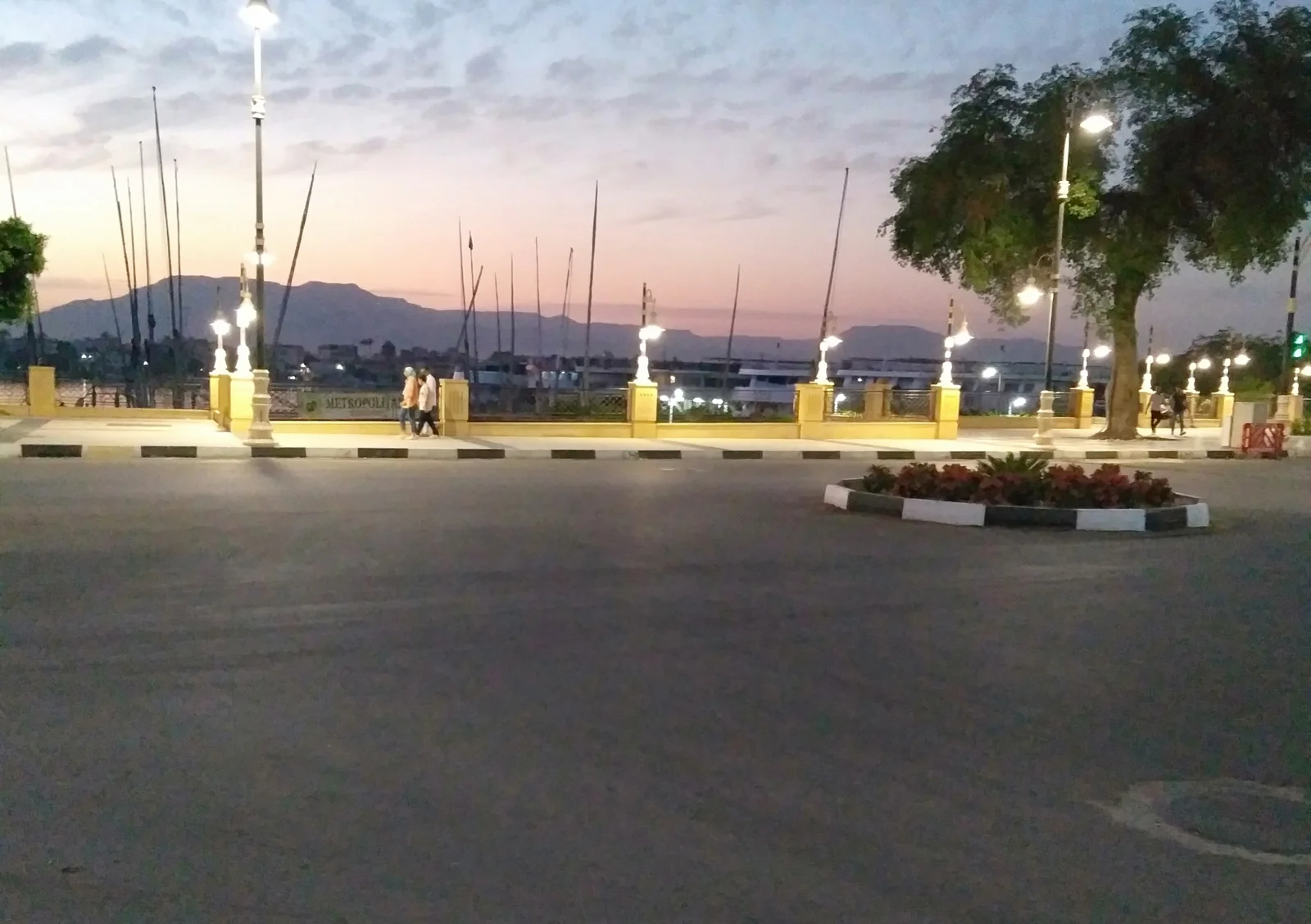
The image accompanying this guide shows Luxor’s East Bank Corniche in 2020. The road, promenade and boats are part of a contemporary city scene. The photograph is not evidence of a current boat departure, a particular public entrance or a present-day traffic condition. It is here to keep the city around the heritage sites visible in the account.
A riverside interval can be useful between longer visits. Choose it around your actual location and the conditions that day, rather than assuming that every part of the bank forms an uninterrupted walking route. If you plan a meal or a view from a particular property, confirm access and any reservation requirement with that place. A hotel terrace shown in someone else’s photograph is not automatically open to every visitor.
Make crossings explicit
A visit involving both banks needs a clear account of how you cross and where you meet on either side. Ask whether the operator provides the transfer, whether it is included in the price and what happens if the stated arrangement changes. The presence of boats on the river does not establish a timetable. If using a separately arranged crossing, confirm the landing and return before relying on it for another timed visit.
Include the approach to the landing or vehicle as part of the question. Steps, uneven surfaces, luggage and the distance from your accommodation can matter as much as the time on the water. Explain any particular access requirements directly to the operator. General phrases such as “easy transfer” cannot replace a description of the actual boarding and arrival conditions.
Compare visits by what they include
Two excursions with similar titles can differ in their named sites, guiding, entrance charges and time available at each stop. Read the inclusions and exclusions together. Ask whether a listed attraction is entered or simply passed, whether the guide stays with you and whether optional stops reduce time elsewhere. Keep the answer with the booking details so that the agreed scope remains clear.
Allow a main interest to lead the day. If you want to look closely at architecture or painted surfaces, a shorter list of sites may serve that interest better than the largest possible circuit. Current entrance and photography rules belong to the responsible site authorities. Check those rules when planning and again when necessary before visiting; this guide does not promise access to a particular tomb, room or viewpoint.
Leave space around the main visit
A daily plan needs more than a sequence of entrance times. Include the journey from your base, a meal and time to pause. Keep weather, your own pace and the requirements of your group in mind when choosing the number of stops. A quiet afternoon is a valid part of a trip, not evidence that the itinerary is incomplete.
If Luxor is one stage of a wider journey, distinguish the local visit from the transfer onward. A boat-based holiday, a land stay and a day excursion involve different check-in, luggage and transport arrangements. Read each plan on its own terms. The Nile provides a shared setting, while the practical details determine whether the connections between your days are comfortable and realistic.

Private Full-Day Tour: Giza Pyramids, Sphinx, Saqqara & Dahshur
Journey through more than 4,500 years of ancient Egyptian history on a private full-day adventure to Giza, Saqqara...

All-in 1 Giza Pyramids, inside Pyramid, sphinx ,camel Ride,lunch
It is an unique privat tour for the VIP guest ,especially plan to suite everyone. If you are a history lover or phot...

Giza Pyramids,Sphinx &Grand Egyptian Museum Tour Full Experience
This is a real all inclusive tour which has no hidden fees and We will provide you with a professional Egyptologist...
Day Trip To Luxor From Cairo By Plane
Experience the beauty of ancient Egypt on our Day Trip To Luxor From Cairo By Plane. Soaring over the desert landscapes and the Nile, this trip offers...
Full-Day Luxor private Tour from Cairo by Plane with Lunch
Every one can give a tour, but we give an exceptional experience of a tour. Take this full-day tour from Cairo by fl...
Regional context: Experience Egypt: Luxor. Continue with Aswan’s city and islands or journey planning.